MISSION & HISTORY
OUR MISSION
We, the Church of St. Peter, in union with Rome and serving the Forest Lake area, are called to make Jesus Christ known and loved.
We do this through our families, neighbors, school and places of work, recognizing Christ in all people.
The first Catholic settlers attended services in a little white frame church in our neighboring city of Wyoming, Minnesota.
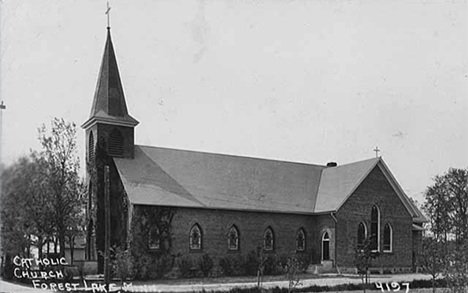
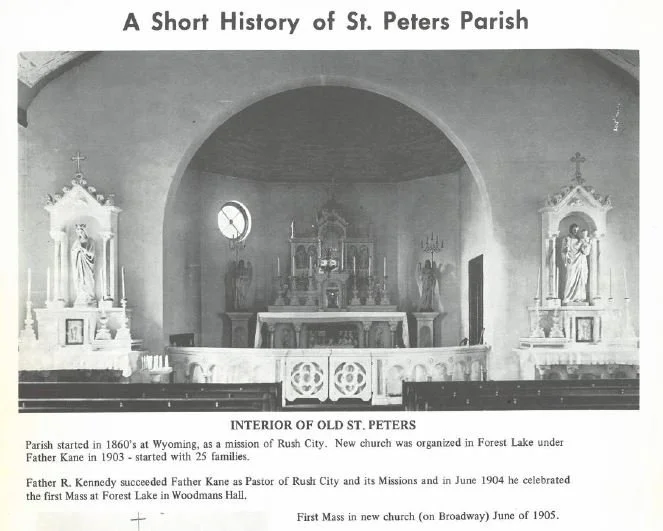
As more settlers arrived, the need for a larger church became apparent. They decided to build a church in Forest Lake. J. W. Houle donated two lots on what is now West Broadway Avenue and 5th Street. Before the church was completed, Father R. V. Kennedy, from Rush City, would arrive by train to celebrate Mass in the “modern” Woodman Hall. It was on the second floor of the hardware store on Lake Street. The hall had many uses, among them dances on Saturday night and church services on Sunday.
Archbishop John Ireland dedicated the newly built Church on November 13, 1905. In 1911, they paid the church debt and burned the mortgage! This is almost unbelievable by today's standards. In 1912, under the pastorate of Father Thomas Gibbons, a parish house was built that included his office. The house, painted light blue still stands on Broadway. The empty lot on the corner next to the house is the former site of the original church before they sold and dismantled it. Father Gibbons retired in 1965 and was our pastor for 44 years.
By the 1950’s there was again a need for a larger church. In anticipation of that, Father Gibbons started a building fund for a church and parochial school before he retired. Father Barry followed Father Gibbons, but he felt he was too old to start this big building project. Nevertheless, he did buy the Bayview property for the future church site, which they later sold.
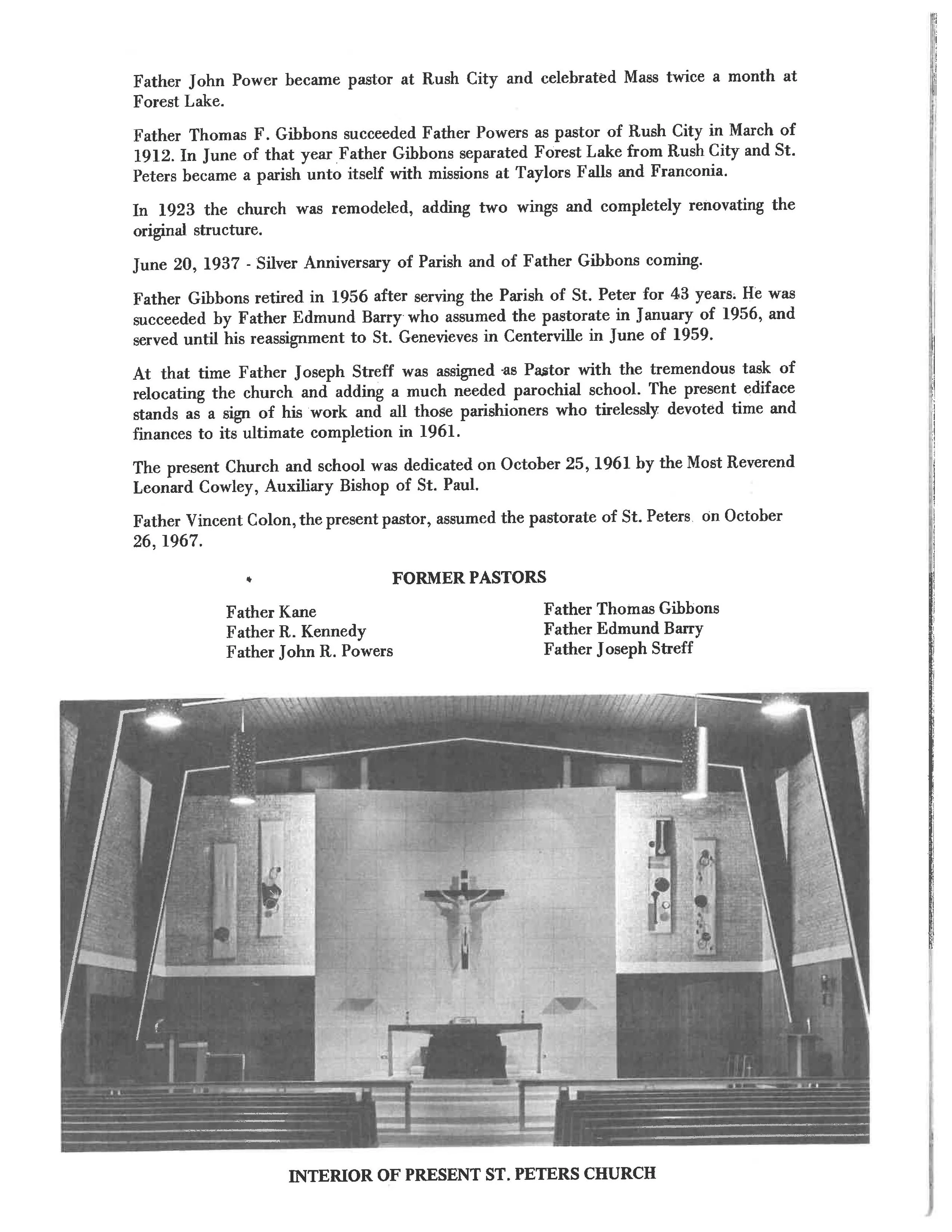
Our next pastor, Father Joseph Streff, faced the task of relocating and building the church and school. Most Reverend Leonard Cowley, Auxiliary Bishop of St. Paul, held the dedication on October 25, 1961. We have had many priests serving our parish since the early days. Saint Peter’s School opened in 1961 and had eight grades in the beginning. Now it has a preschool program, child-care, and classes for kindergarten through 8th grade.
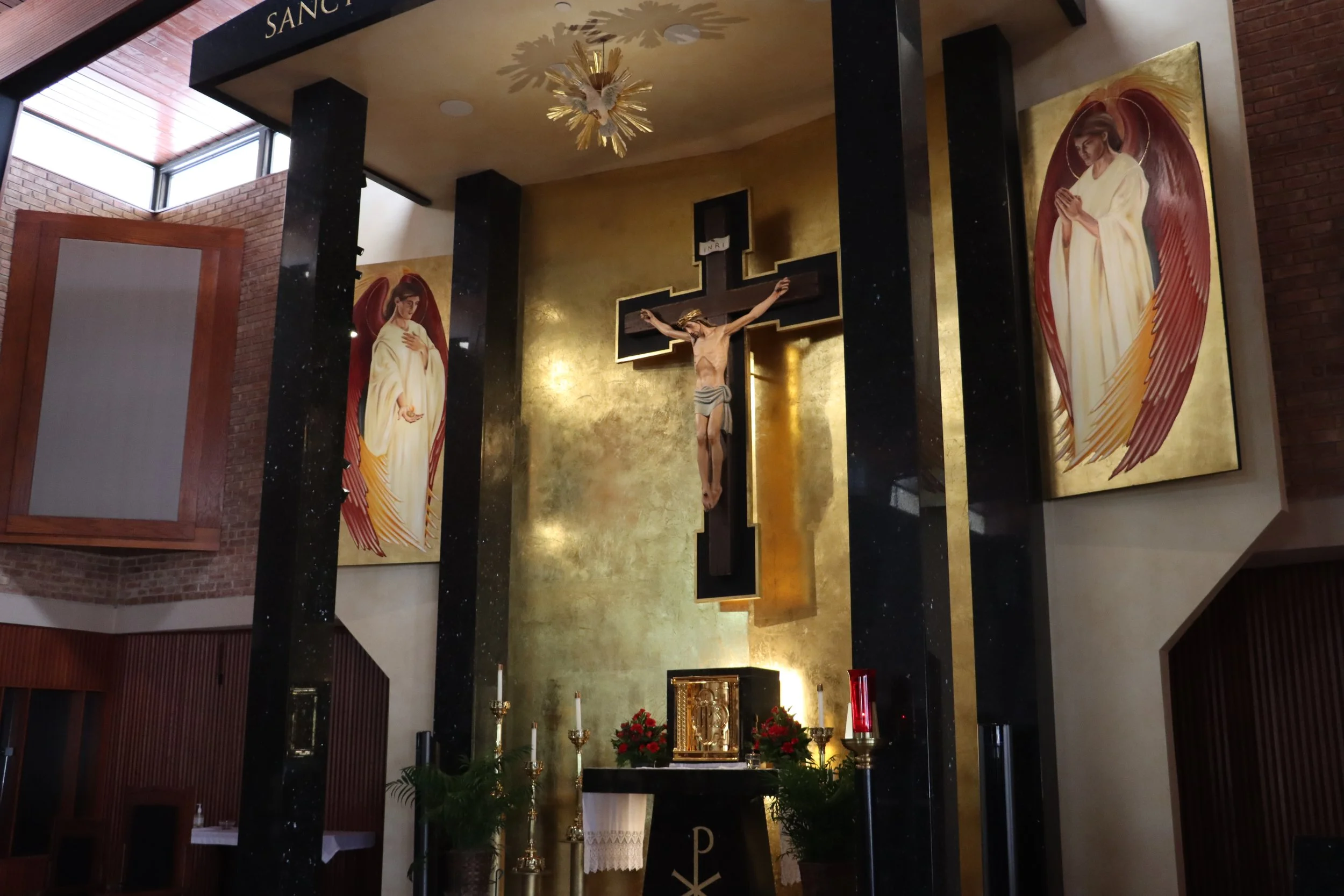
The old convent that once housed the teachers for Saint Peter’s School, the School Sisters of Notre Dame, now serves as our Annex for Faith Formation, Bible Studies, Youth and Family Programs. The Divine Mercy Chapel for Perpetual Adoration is located in the main building. It used to be in the basement of the Annex.
Please note that the history of our Catholic faith in this area began in 1860, which is 160 years. Our Centennial celebration is based on the dedication of the new church on West Broadway on November 13, 1905 through November 13, 2005.
Written by Elsie Vogel (member of the Church of St. Peter from 1928 until her death in 2003)
HISTORY OF ST. PETER
SAINT PETER
Peter was born at Bethsaida, near the Sea of Galilee. Peter, whose name was originally Simon, was a fisherman along with his brother Andrew. Andrew was one of the first followers of Jesus and he encouraged his brother to join him.
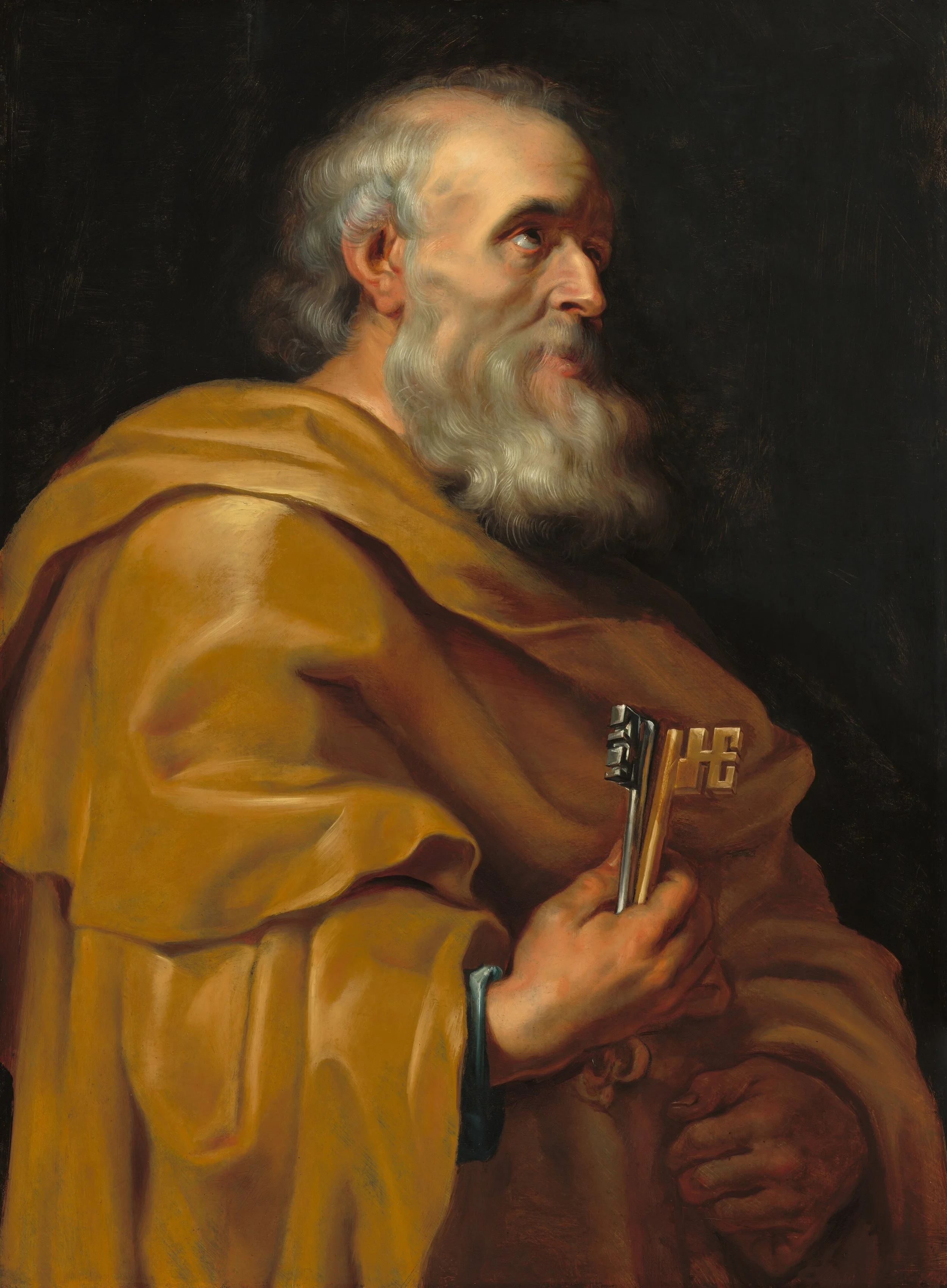
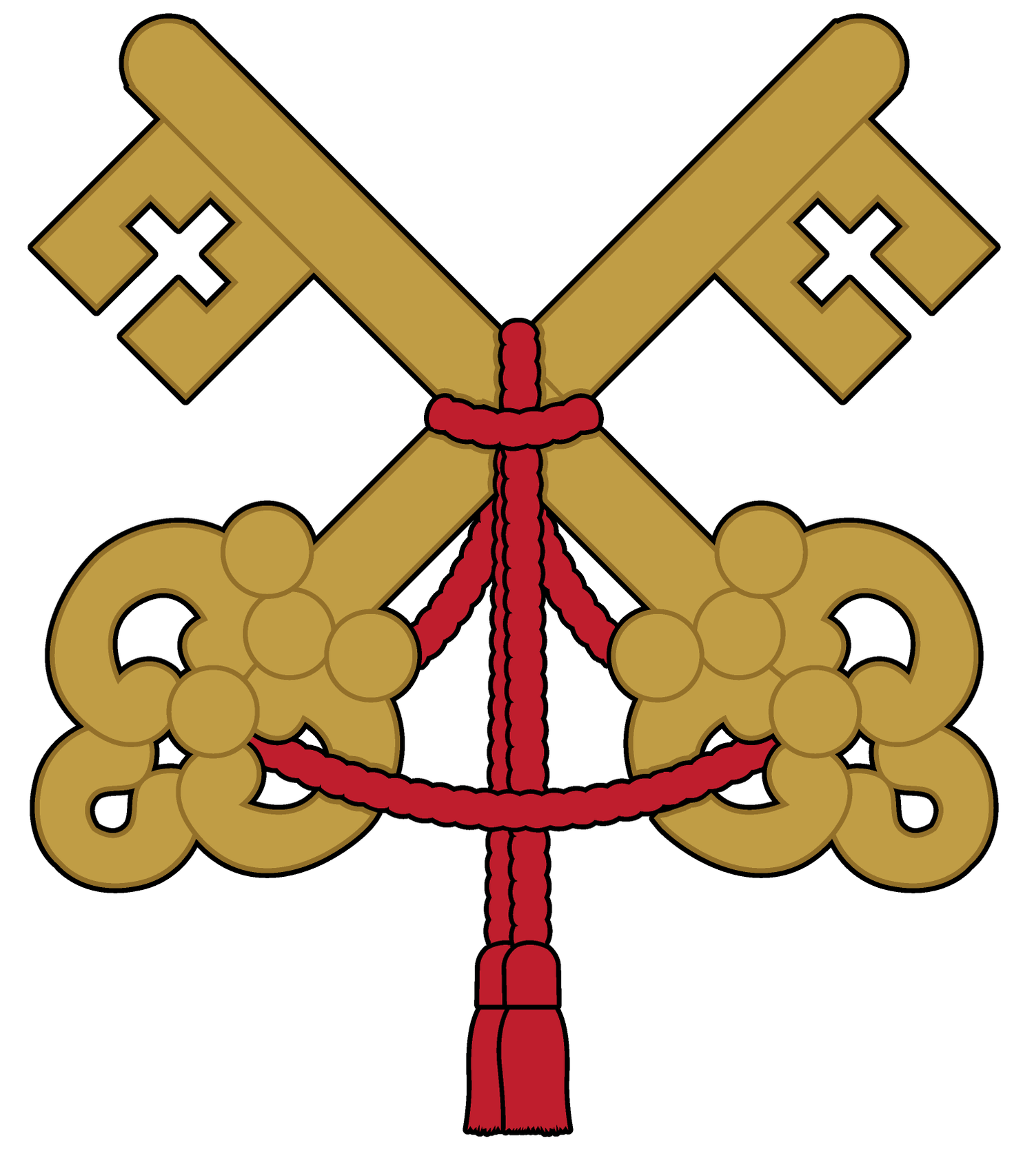
During Jesus’ ministry, the gospels show Peter as the foremost apostle in declaring faith in him as the Christ. The name Peter, meaning ‘rock’, was selected by Jesus to indicate that he would be the rock-like anchor for the unity of the Church. Jesus also promised to give him the keys of the kingdom of heaven, which is why depictions of Peter generally show him holding a pair of keys. At the time of the arrest of Jesus, Peter cut off the ear of a servant of the high priest with a sword but then, as had been predicted by Jesus, he denied three times that he had ever known him. After Jesus’ resurrection, Peter re-affirmed his love for Jesus and was commanded to “feed (his) lambs”, to take care of the Church.
The Acts of the Apostles show Peter taking the lead in addressing the crowds gathered in Jerusalem for the feast of Pentecost. As the leader of the christians in Jerusalem, he was targeted by Herod for execution but miraculously freed from prison on the night before he was to stand trial.
Peter then left Jerusalem and travelled to spread the Gospel. According to tradition, he was in Rome in 63/64AD during the rule of the Roman emperor Nero. In 64 AD Nero blamed the christians for a disastrous fire in the city. Peter was one of the christians who was taken prisoner and was sentenced to death by crucifixion. At his own request, he was crucified with his head downwards because he did not consider himself worthy to die in the same posture as his Divine Master.